
Rice Purity Test Score: Meaning and Results
Written and reviewed by Adrian Vale, Editor. Reviewed . Fact-checked .
Your Rice Purity Score
This result is entertainment. It does not measure character, morality, maturity, health, or worth.
A Rice Purity Test score is 100 minus the number of checked items. A higher number means fewer listed experiences were checked. A lower number means more were checked. It is a count for one question version, not a grade, diagnosis, moral rating, or measure of personal worth.
If you came here without taking the test
This page is the complete general score guide. It works as a direct-visit reference. It does not display a personal result unless a later private result feature supplies one.
You can take the test when the interactive quiz is added. That control is not live yet. The current homepage explains the project while the quiz remains in development.
No score needs to be submitted to read this guide. The examples below let you check the arithmetic. They also explain how to read a number without turning it into a judgment.
How is the Rice Purity Test scored?
The Plus 100 formula is:
100 - checked items = score
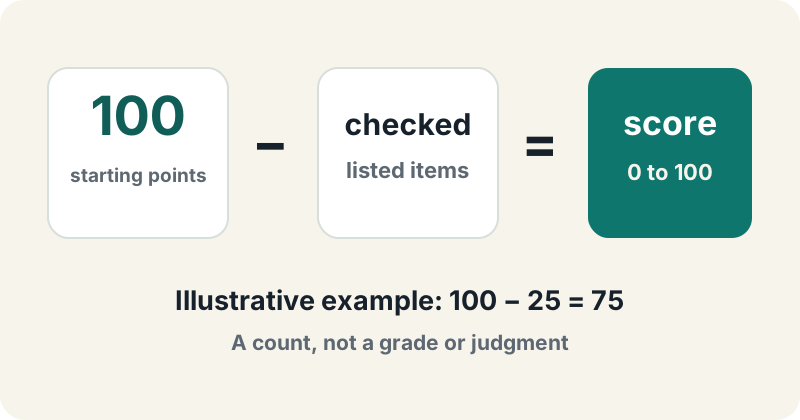
Each checked item lowers the score by one point. Each unchecked item leaves one point in the score. The result must be a whole number from 0 through 100.
The formula is simple because the list has 100 items. It does not weight one experience more than another. A checked item in one topic has the same numerical effect as any other checked item.
That equal arithmetic does not make all experiences alike. Items can cover very different parts of adult life. The total only reports how many listed experiences a person checked.
Five score examples
| Checked items | Calculation | Score |
|---|---|---|
| 0 | 100 - 0 | 100 |
| 1 | 100 - 1 | 99 |
| 50 | 100 - 50 | 50 |
| 99 | 100 - 99 | 1 |
| 100 | 100 - 100 | 0 |
These examples also work in reverse. Subtract a score from 100 to find the checked count. A score of 72 therefore means 28 listed experiences were checked.
The result is tied to the version shown with it. Plus 100 uses version plus-100-en-2026-08-28. Another list may have different wording, order, or scoring rules.
What higher and lower numbers show
A higher numerical score shows that fewer items were checked on this list. A lower numerical score shows that more items were checked. That is the full direct meaning.
The direction can feel unusual. Many quizzes add points for selected answers. This one starts at 100 and removes one point for each checked experience.
The number does not explain why an item was checked. It does not show when the experience happened. It cannot show whether it was welcome, safe, important, rare, or repeated.
Two people can receive the same score from different checked items. They can also understand similar events in different ways. The total hides those differences by design.
Rice purity score chart
The ranges below make a long scale easier to explore. They do not change the one-point formula.
| Score | Checked items | Description |
|---|---|---|
| 90–100 | 0–10 | Higher numerical score; fewer listed experiences checked |
| 70–89 | 11–30 | 11–30 listed experiences checked |
| 50–69 | 31–50 | 31–50 listed experiences checked |
| 25–49 | 51–75 | 51–75 listed experiences checked |
| 0–24 | 76–100 | Lower numerical score; more listed experiences checked |
These bands are editorial navigation aids. They are not official norms, grades, percentiles, or personality types. Their edges do not mark a change in health, character, maturity, or worth.
A score on either side of an edge differs by one checked item. A 69 and a 70 are not different kinds of people. The table simply places them in adjacent reading bands.
Use the checked-item column when you want exact meaning. Use the description only as a quick orientation. The raw score remains more precise than the range label.
Is there a good or bad score?
There is no universal good Rice Purity Test score. There is also no universal bad score. Those labels add a value judgment that the arithmetic cannot support.
A higher number is not proof of better choices. A lower number is not proof of worse choices. The list includes experiences, not a ranked set of virtues or harms.
Some items can involve risk or difficult events. A total cannot identify those circumstances. It would be unsafe to infer them from a number alone.
Personal reactions can still be real. Someone may feel amused, surprised, uneasy, or indifferent. Those feelings do not turn the result into an objective grade.
What is a high or low score?
“High” and “low” can describe position on the 0-to-100 scale. They should not describe the person.
A high numerical result means relatively few listed experiences were checked. A low numerical result means relatively many were checked. The exact checked count is always 100 minus the score.
There is no scientific cutoff where a score becomes high or low. Our table uses broad bands only for navigation. Another publisher may draw different boundaries.
When comparing numbers, name the list and version. A number from a 150-item publication cannot be treated as the same measure. Even two 100-item lists can differ in content.
Is there a normal score?
No universal normal Rice Purity Test score has been established here. “Normal” can mean common, healthy, expected, or acceptable. Those meanings are not interchangeable.
A historical sample can report an average. That does not create a norm for every visitor. It also does not decide what is good for an individual.
Age, location, social setting, question version, and who chooses to participate can affect a sample. A sound comparison would need clear demographic and collection methods. We do not have that evidence for a universal norm.
We therefore do not publish invented averages by age, gender, country, college, or generation. The average score guide explains the one dated sample in our evidence register.
A documented historical sample
A February 2018 Rice Thresher page reported 124,952 completed tests. It reported a mean score of 61.46. It also reported 2,719 scores of 100 and 336 scores of 0.
Those figures describe that implementation and its participants at that time. They are not a current or representative population average. The source later returned an access error during review.
The figures remain useful as a dated record. They show that one implementation published aggregate results. They do not tell a new visitor what result to expect.
Read Average Rice Purity Score: Data and Limits for the sample context. That page owns average and demographic comparison questions.
What a score can show
A valid Plus 100 score can show four narrow facts:
- the result belongs to a 100-item list;
- the checked count equals 100 minus the score;
- a higher number corresponds to fewer checked items;
- a lower number corresponds to more checked items.
It can also help a person review their own responses. That use stays personal. The total does not need an outside comparison to be understandable.
The version label adds another useful fact. It identifies which ordered dataset produced the number. That prevents quiet wording changes from being mistaken for the same test.
The score may support light entertainment or reflection. It can prompt a discussion about how lists reflect culture. Those uses should keep the limits visible.
A plain way to read your number
Start with the score itself. Then take it from 100. The amount left is the checked count.
For a score of 84, the checked count is 16. For a score of 37, the checked count is 63. The same rule works at each end of the scale.
Next, name the list. A score has clear math only when its base is known. Plus 100 has a base of 100.
Then stop at what the count can show. Do not add a rank, trait, or life story. The sum has no facts about the mix of checked items.
This short process is often enough:
- Note the score.
- Subtract it from 100.
- Name the test version.
- Keep the result free from a value label.
That last step is key. A number can be exact while its use stays narrow. Clear math does not grant a broad claim.
If you want to talk about the result, use count words. Say “more listed items” or “fewer listed items.” Those terms match what the score can show.
Avoid claims about who a person is. The test cannot read a mind, prove a past, or sum up a life. It can only count marks on its own list.
Why the exact item mix stays unknown
The score does not keep a map of checked items. That is good for privacy, but it also sets a firm limit.
For example, a score of 80 always means 20 checked items. It does not say which 20. Many sets can lead to the same result.
The same point holds for close scores. A one-point gap means one more checked item. It does not show how alike or unlike the two sets are.
This is why the site does not name a type for each band. A band would hide even more detail than the score. It must stay a map aid, not a profile.
You can choose to think about your own answers. The site does not need to store them for that use. Your own view has more context than the total can hold.
What a score cannot show
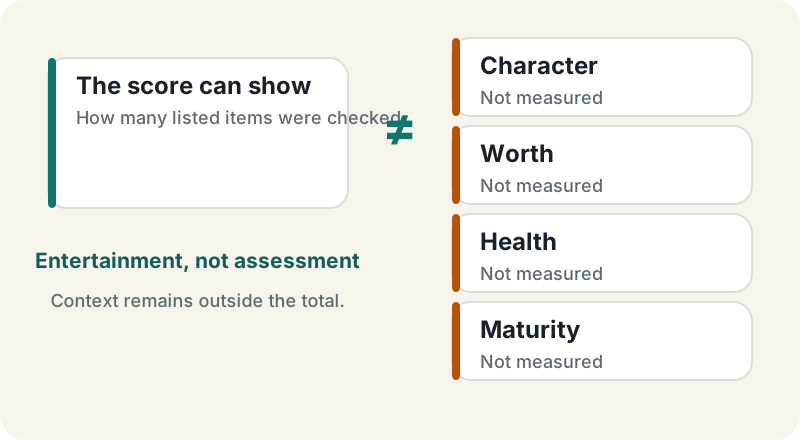
The number cannot measure innocence, purity, morality, maturity, personality, health, safety, or worth. It is not a medical or psychological assessment.
It cannot show consent or context for a past event. It cannot show frequency, timing, impact, or current behavior. It cannot identify which specific items were checked.
The result cannot rank the quality of two lives. Equal totals can come from different answers. Different totals can come from one item of difference.
It also cannot prove a population position. Without a suitable reference sample, a percentile would be invented. We do not turn the historical mean into one.
The score cannot settle what is “typical” for an age or place. It cannot replace health, legal, or safety advice. A concern deserves relevant support, not a quiz label.
Privacy and the future local result
The approved product design keeps quiz processing in the browser. Answers are not sent to a result database. No account is needed, and the site does not collect the checked list.
The future quiz will calculate the score locally. It will pass one result to /score/ for one use in the browser. The score page will remove that temporary record after reading it.
The personalized number will not appear in page metadata or structured data. It will not become part of a public profile. The site will not create a leaderboard.
This is the locked implementation plan, not a claim that the interactive flow is already live. The current page is a static general guide. No result handoff exists yet.
A person may always visit this URL directly. In that state, the page remains useful without a result. It explains the formula, ranges, evidence, and limits.
Retaking and sharing
The future quiz is planned to offer a retake action. Retaking will begin a new local session. It will not retrieve an old answer record from a server.
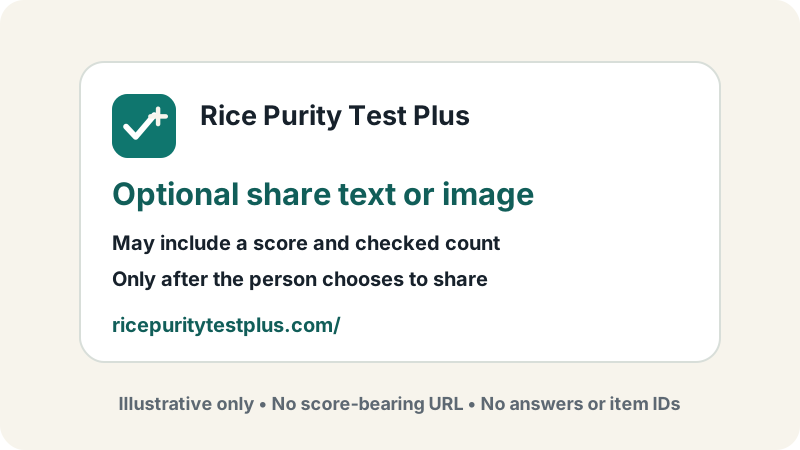
Sharing should remain a deliberate user choice. A future control may help share the general test or a chosen score message. It must not transmit the checked answers.
No retake or result-sharing control is live in this phase. This guide does not imitate one. It also does not show a fake result card or submission message.
Before sharing a number, remember its limits. A score can invite assumptions that the total cannot support. A person does not owe anyone their result.
Common score questions
Why did checking an item lower my score?
The formula starts at 100. Each checked item subtracts one point. The direction comes from the scoring convention, not from a judgment about the experience.
Can two people with the same score have different answers?
Yes. The total stores no item pattern. Many different checked sets can produce the same count.
Does a score of 100 mean a person is pure?
No. It means zero listed items were checked on that version. “Pure” is a historical label, not a supported trait measurement.
Does a score of 0 mean every event happened often?
No. It means all 100 items were checked at least once under the quiz instructions. The total does not record frequency.
Is 61.46 the normal score?
No. It was the reported mean for one February 2018 implementation and sample. It is not a universal norm or personal target.
Can a score diagnose a health or behavior issue?
No. The quiz is not a diagnostic instrument. The number lacks the context required for a health or safety conclusion.
Which score version should I compare?
Compare only results from the same named dataset when possible. The Plus 100 version is plus-100-en-2026-08-28. Historical and modern lists can differ.
Where can I check the evidence?
Use the source register for dated records. Read the methodology for evidence rules. The editorial policy explains review and corrections.
Sources and limitations
The arithmetic for Plus 100 follows the approved dataset contract. The dated comparison uses the Rice Thresher’s February 2018 aggregate record. That page was access-restricted during the latest review.
The documented 1998 publication gives historical context for a 100-question test and a count-based rule. It does not prove that every later list is identical.
This page separates score meaning from average claims. It also keeps history on the history page and version lineage on Questions and Versions.
Evidence can change when stronger records appear. Corrections follow the editorial policy. The present guide makes no promise of official affiliation, scientific validity, or a universal norm.