
Rice Purity Test: 100 Questions, Private Score
This independent test is a private checklist of life experiences. Your selections stay in this browser tab while you answer.
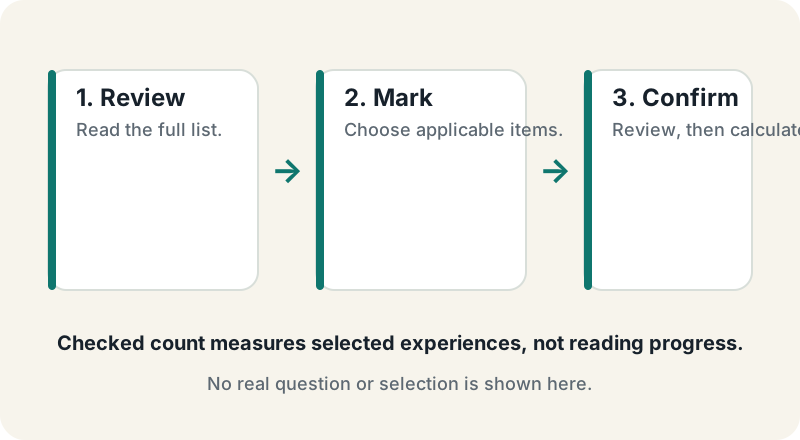
Check each experience that applies, then review your choices before calculating.
- No account
- No answer upload
- Independent website
Take the private test
Adults only: review before starting
This test is intended for people 18 and older. It includes mature and high-sensitivity topics.
Test content hidden
Your selections were cleared.
No questions match your search.
Your Rice Purity Score
Your score only reflects how many listed items were checked. It is entertainment, not a measure of character, morality, maturity, health, or worth.
Local tab storage was unavailable, so the result remained on this page.
Rice Purity Test Plus 100
Version plus-100-en-2026-08-28
SHA-256 67af5268ab9ee0e3f2b1327769f5fc5b540db8fec027845f01200007688ebb27
Questions and versions
How scoring works
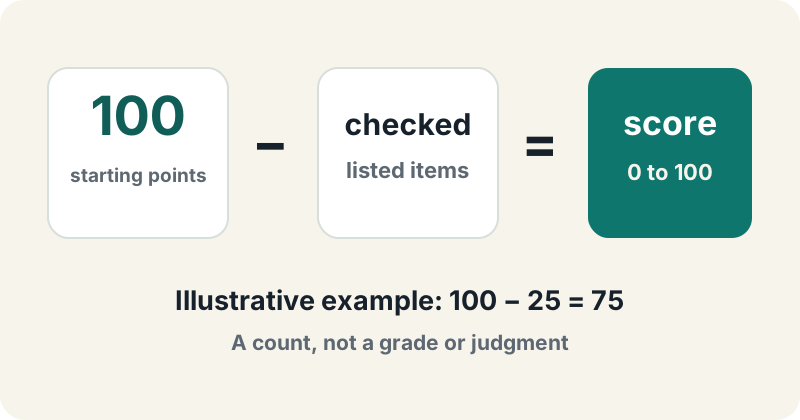
The calculation begins at 100. It subtracts one point for each checked item. For example, checking 25 items gives 100 minus 25, which equals 75. Unchecked items count as No after you confirm your review.
The checklist never shows a live result. You can search, change views, and revisit categories first. The confirmation step helps prevent an accidental calculation. It also makes the treatment of unchecked items clear.
Take your time as you read. A check means Yes for that one line. A blank box means No when you choose to get the score. You can go back at any point. The list will not lock an old choice. Use the broad view to scan all groups. Use the one-at-a-time view when you want less text on screen. Both views use the same set of boxes.
The result handoff uses temporary tab storage. The score page removes that record as soon as it reads it. Your individual answers never enter that record.
Read the score guide for a fuller explanation. It covers the formula and common limits without assigning a personal label.
What a result can show
A result shows one simple count. It tells you how many listed experiences you checked. It can help you compare your answer set with the same list at that moment.
It cannot explain why an experience happened. It cannot show whether an event was wanted, safe, recent, or important. It cannot measure character, morality, maturity, health, or worth. It is entertainment, not a diagnosis or professional assessment.
Two people can reach the same total through different answers. Their stories can still have little in common. Even one person may answer differently as time passes. The number does not preserve that detail.
A score is not a grade. There is no prize at the top or the low end. No one needs to share it. You can close the tab once you see it. If you do share, think first about who may see the post. The score may feel more broad than the facts that led to it, yet it is still your choice to keep it to yourself.
Context matters more than a single number. The list also reflects editorial choices. Experiences outside it do not affect the total. Read what the test is for its purpose and limits.
Why there is no universal normal score
People have different ages, cultures, opportunities, boundaries, and histories. A number cannot combine those differences into one fair standard. Online samples also vary by audience and method.
A result from one version may not match another version. Wording and included topics can change. A voluntary web audience is not everyone. Claims about a typical result need evidence that fits the exact question.
For those reasons, this site does not define a universal good, bad, or normal result. It does not rank people. The average score guide explains why an average needs a named source and clear limits.
You may choose not to answer. You may also hide the test at once. If a topic feels uncomfortable, stop and use support that fits your situation.
A short history
Purity tests existed in several forms before today’s web versions. A list associated with Rice University student culture later became widely known online. Surviving records do not support every popular origin story.
Many later sites changed the presentation or list without clear version records. That makes broad comparisons difficult. A date, named version, and checksum give readers a clearer reference point.
Our history guide separates supported facts from uncertain claims. The source register shows the evidence used by this project. This Plus 100 list uses independently authored wording and a published checksum.
Privacy in this test
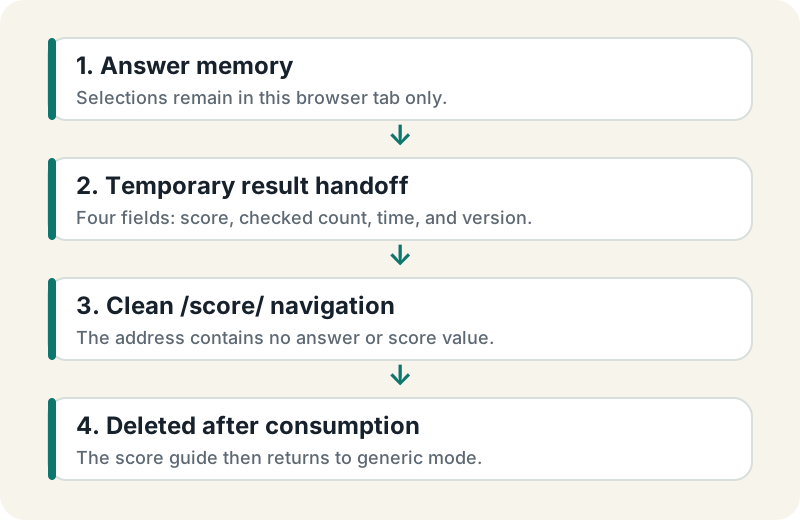
Selections live only in page memory. They are not placed in URLs, cookies, local storage, logs, or network requests. Reloading clears them. Reset and Hide also clear them.
Search words and category progress also remain local. Buttons do not create filter links. No form sends the checklist. This means there is no account history to restore later.
The Hide control wipes each check and swaps the list for a calm blank state. Reset asks first, then does the same wipe and takes you back to the start note. A page load does not bring old checks back. The site does not try to guess what you chose. This is a key part of the plan, since less stored data means less data can be lost or used in a way you did not mean.
After confirmed calculation, only four result fields enter short-lived session storage. They are score, checked count, creation time, and question version. The score page consumes that record once. See privacy and safety for the complete explanation.
Questions people ask
Do I need an account?
No. The test has no account, profile, or sign-in step.
Are my checked answers sent anywhere?
No. Answer state stays in memory inside this tab. The site sends no item IDs during selection or scoring.
Can I save my progress?
No. This design avoids persistent answer storage. A reload starts a clean attempt.
Can a query string set my score?
No. Result values never come from the address. The only personalized result comes from the one-use local handoff.
Why do some topics feel sensitive?
The list covers adult experiences, substances, risk, law, and relationships. The notice lets you decide before controls become active.
Which version am I taking?
The quiz publishes its version and SHA-256 checksum beside the interface. The version guide explains how those values support review.
Can I change an answer?
Yes. Switch views or use category controls without losing selections. Nothing is calculated until you confirm.
What happens if tab storage is blocked?
The page shows the result locally instead of navigating. It does not create another storage method.
Editorial note
Adrian Vale is the editorial pen name used for this project. The question set and supporting guides follow the documented editorial policy and methodology. The material was reviewed on August 29, 2026.
Editors check wording, sensitivity labels, source use, and technical behavior. The public checksum makes later wording changes visible. Internal notes do not appear in the quiz. Sources support history and factual context, not private answers.
This website is independently funded and operated. It is not affiliated with, endorsed by, or an official publication of Rice University or The Rice Thresher. No institution supplied or reviewed this version.