
Is the Rice Purity Test Safe? Privacy and Safety
Written and reviewed by Adrian Vale, Editor. Reviewed . Fact-checked .
The Rice Purity Test Plus 100 is intended for adults aged 18 and over. It contains mature and high-sensitivity topics. You may skip the test or stop at any time. The locked design keeps selections and scoring in your browser, but screen privacy and device security still depend on your surroundings and device.
Know the topics before you begin
The Plus 100 includes standard, mature, and high-sensitivity items. Some topics may involve sex, substances, unsafe conduct, or difficult experiences. The wording avoids graphic detail, but the subject can still feel personal.
The test is intended for adults aged 18 and over. It is not directed to children. The site does not ask a visitor to submit an age.
You control whether to begin. You can leave an item unchecked. You can also close the page or stop without finishing. No result is worth discomfort.
Taking the test is optional. A friend, partner, school group, or online audience should not pressure you to participate.
How selections stay local
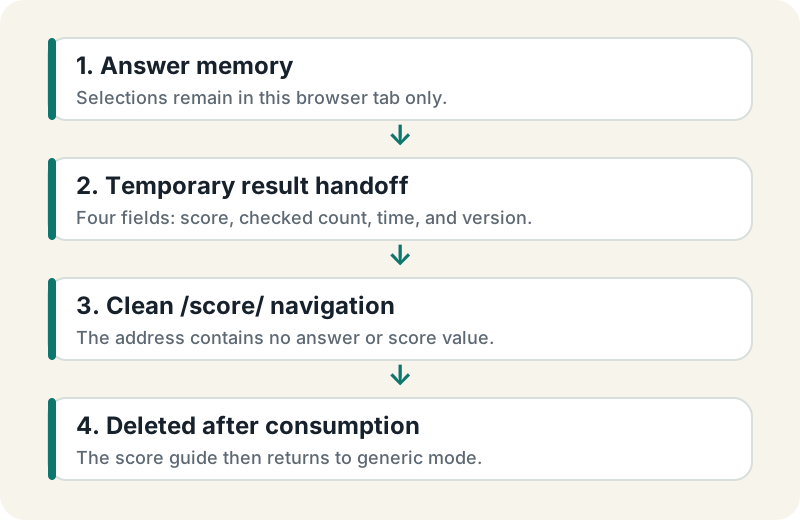
The locked Plus design uses browser-local processing. While you take the test, selections stay in browser memory. The site does not upload answers or selected item IDs.
Scoring also happens in the browser. The page counts checked items and applies the approved formula. It does not send those choices to a result database.
The site does not create accounts or profiles. It does not attach answers to a login. It does not build a leaderboard from scores.
The site also never places your score in the URL. A copied address should not reveal the result.
These statements describe the locked implementation contract. The homepage quiz and result handoff are not active yet. They must pass privacy tests before launch.
The same-tab score handoff
The approved result flow uses one short-lived record. It supports a same-tab move to /score/. The record is not a history of answers.
It contains only four values:
- the score;
- the checked count;
- the creation time; and
- the question version.
It contains no answers. It contains no selected item IDs. It cannot reconstruct which experiences were checked.
The /score/ page consumes the record once. It then deletes the stored copy. A refresh should not restore a personalized result from that record.
This narrow handoff differs from permanent score storage. It also differs from placing a score in a query string. Read the score guide for what the number means.
What browser-local does not mean
Browser-local processing does not mean complete anonymity. A normal page request still occurs when you load the site. The server must deliver the page files to the browser.
Someone nearby may see your screen. A shared display may expose checked items or a result. Use a private setting if screen visibility matters.
Screenshots and copied share text are under your control. Once you send them, another person may keep or forward them. The site cannot withdraw a copy from somebody else’s device.
A shared device may have other risks. Browser extensions can observe pages within their permissions. Malware or a compromised device can defeat normal browser protections. Those systems are outside this site’s control.
Private browsing modes can reduce local history in some cases. They do not guarantee privacy from every device, network, or observer. This page does not make that promise.
Use the test without pressure
Do not pressure another person to take the quiz. Consent to discuss a topic is not consent to answer a checklist.
Do not request proof or screenshots. A person can keep both answers and score private. Refusal does not imply any particular result.
Do not shame or rank people by score. The total does not measure worth, morality, maturity, or relationship quality.
Do not complete the test for someone else without consent. Guessing another person’s experiences can violate trust. It also produces a result with no reliable meaning.
If people compare scores, they should use the same question version. They should also accept that no explanation is owed. See questions and versions for version limits.
The score is not advice
The test is entertainment. It is not medical advice. It cannot assess physical health or diagnose a condition.
It is not mental-health advice. A response pattern cannot replace care from a qualified professional. The score does not identify trauma or emotional needs.
It is not legal advice. The checklist cannot determine whether conduct was lawful. Laws and facts require proper legal context.
It is not relationship advice. A number cannot resolve consent, boundaries, trust, or compatibility. Those topics require direct and respectful communication.
The site’s methodology explains why claims stay narrow. The editorial policy explains how sensitive claims and corrections are reviewed.
When a quiz is the wrong tool
Coercion is a real-world concern, not a score category. If someone is pressuring you, the quiz cannot make that situation safe.
Unsafe conduct also needs real context. A checked item does not tell the site whether anyone faces harm. The score cannot provide a safety plan.
Immediate danger requires appropriate real-world help. Contact local emergency services when that is safe and suitable. A trusted person or qualified support service may also help with a non-immediate concern.
This guidance stays general. It does not assess an individual situation. It does not replace medical, legal, mental-health, or safeguarding support.
Practical steps for a private session
Choose a place where others cannot easily view the screen. Check whether you are sharing a display before opening the quiz.
Use a device you trust. Review browser-extension access if you have concerns. Avoid entering sensitive responses on a device controlled by another person.
Keep screenshots private unless you truly want to share them. Remove personal details from any voluntary share text. Remember that recipients may save a copy.
Stop if the content feels uncomfortable. You do not need to finish for the session to be valid. You do not need to explain why you stopped.
What this page covers
This page explains the quiz’s intended audience, data flow, and safer social use. It describes the locked Plus 100 design and its limits.
It is an educational safety guide. It is not the future formal privacy policy. That legal page must match the final production services and jurisdiction before launch.
No third-party tracking, consent service, advertising service, or external integration is active in this phase. This guide does not describe an unimplemented vendor as live.
A short safety check
Pause before you start. Ask who can see the screen. Check that screen share is off. Use a device that you trust.
Read the topic note. If the list may cause stress, you can skip it. You do not need to test your own limits.
Make sure the choice is yours. A dare is not a duty. A friend may invite you, but the last word is yours.
Keep each answer on your own screen. Do not read out each choice in a group. Do not ask a friend to show you their marks.
At the end, think before you share. A score can prompt more questions than you want to hear. You can close the tab and say nothing.
If you do share, use plain facts. Say that the score is a count from one list. Do not let it stand in for your full life.
On a shared device, close the page when done. Check that no one else needs the device at that time. The one-use score record is meant to be removed by the score page, but a safe place still matters.
If a person tries to force proof, stop the chat. You do not need to win an argument about your own privacy. Seek help from a person you trust if the pressure does not stop.
These steps cannot fix a device that has been hacked. They cannot control a browser add-on with broad access. They can reduce simple screen and share risks.
The best rule is clear: you choose if you take the test, what you share, and when you stop.
Frequently asked questions
Are my selected answers uploaded?
No. Under the locked design, selections remain in browser memory. Answers and selected item IDs are not uploaded.
Is my score put in the URL?
No. The site never generates a score-bearing URL. The approved same-tab handoff uses a one-use local record instead.
What remains in that record?
Only the score, checked count, creation time, and question version. The record contains no answers or item IDs. /score/ deletes it after use.
Is the test completely anonymous?
That claim would be too broad. Normal page requests occur. Screen viewers, extensions, shared devices, and compromised devices can create privacy risks.
Can someone ask me for a screenshot?
They can ask, but you do not owe proof. Sharing is your choice. Pressure or shame is not a safe use of the test.
Is this a privacy policy?
No. This is an educational guide. A formal policy will be written only after the production data flow and services are final.